October 6, 2026
Why Asian Games MMA Looks Different From Professional MMA
Why does Asian Games MMA look different from pro MMA? Learn how amateur format, safety rules and equipment shape the bouts.
When MMA enters the Asian Games at Aichi-Nagoya 2026, it will not be a copy of a professional fight promotion. It will be a medal sport with an amateur framework, national-team entry requirements, division-specific equipment and rules designed for a multi-sport tournament.
That matters to Cebu fans, coaches and fighters who follow Konvoy. The key phrase is Asian Games MMA rules: the sport will still feature striking, takedowns, grappling and submissions, but the format should be judged against its own rulebook rather than against one professional promotion.
What Rules Govern Asian Games MMA?
The Olympic Council of Asia (OCA) confirmed MMA for the 2026 Asian Games as a combat-sports discipline with six events: four for men and two for women. The OCA announcement is the source for that Games-level decision.
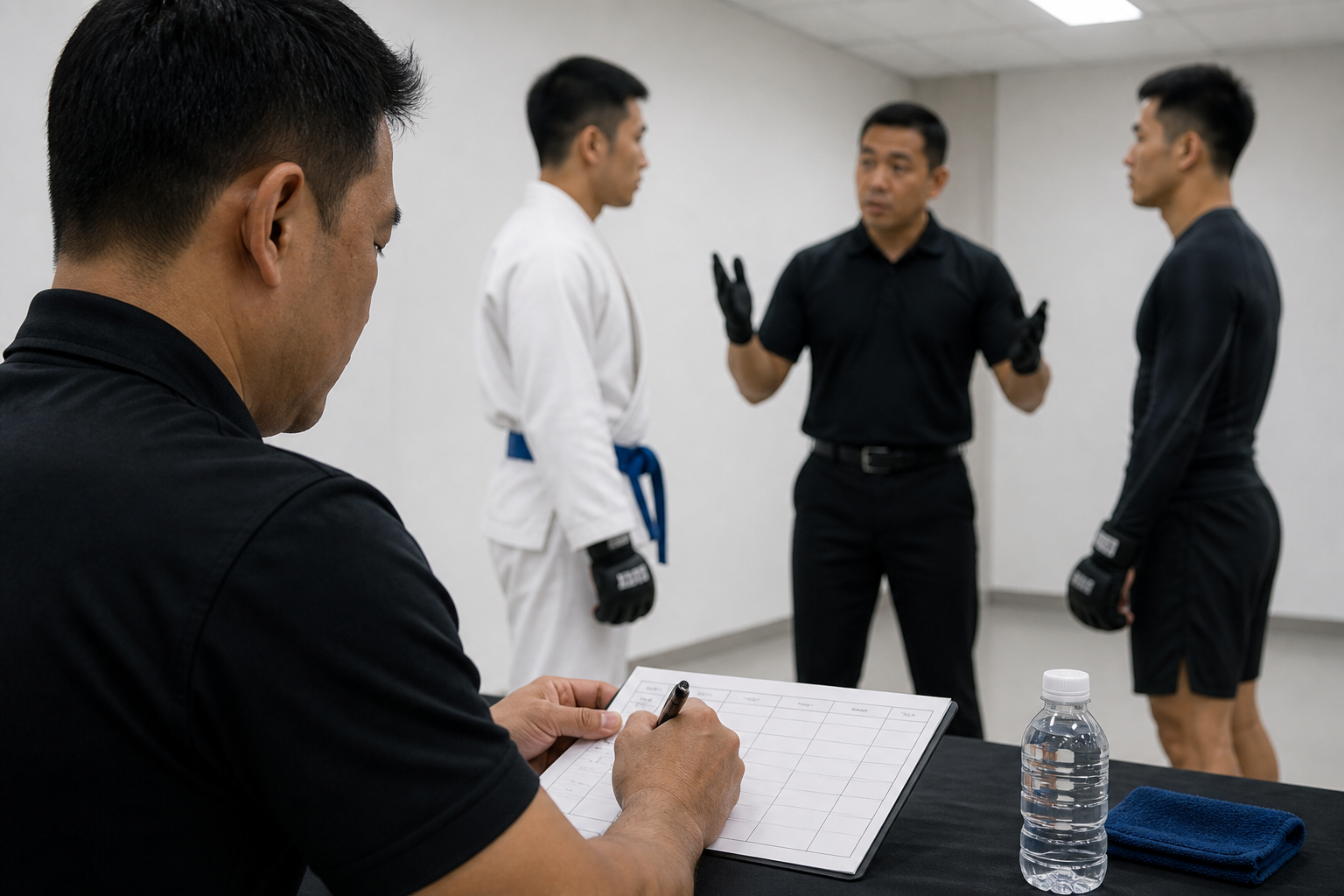
The Aichi-Nagoya 2026 MMA page identifies two styles. Traditional MMA uses a gi, while modern MMA uses MMA shorts and a rash guard. Technical details come from the AMMA Competition Rules, the Asian Mixed Martial Arts Association rulebook currently published for adult competition. The PDF is dated 8 April 2024, so athletes should confirm the final Aichi-Nagoya event manual before competing.
Modern and traditional MMA are different divisions
Traditional athletes wear an approved gi, and the gi, pants and belt can be grabbed. Modern athletes wear an approved rash guard and MMA shorts, and that clothing cannot be grabbed. Both divisions share striking, throws, takedowns, ground control and submissions, but a technique legal in one division is not automatically legal in the other.
The Main Differences Fans May Notice
Bout length and tournament format
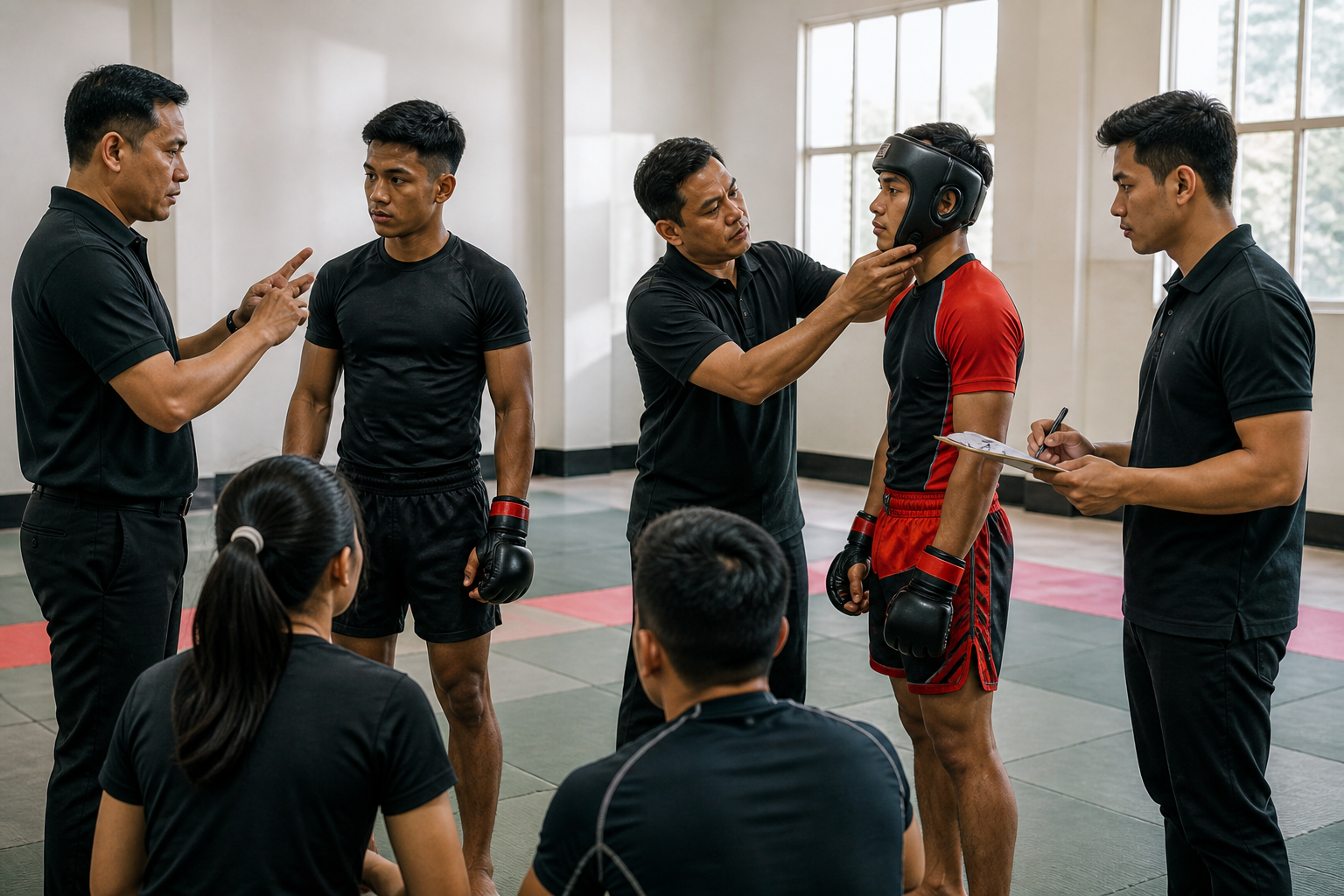
The AMMA rules describe two-round matches. Preliminary rounds are three minutes each, finals are five minutes each, and the break is one minute. A draw can lead to one-minute overtime, and each athlete has up to three minutes of cumulative medical time in a bout.
This is why fans should not assume every Asian Games bout follows a professional promotion’s three-five-minute-round format. Brackets, weigh-ins and possible repeat competition also make pacing and recovery important across the tournament.
Protective equipment
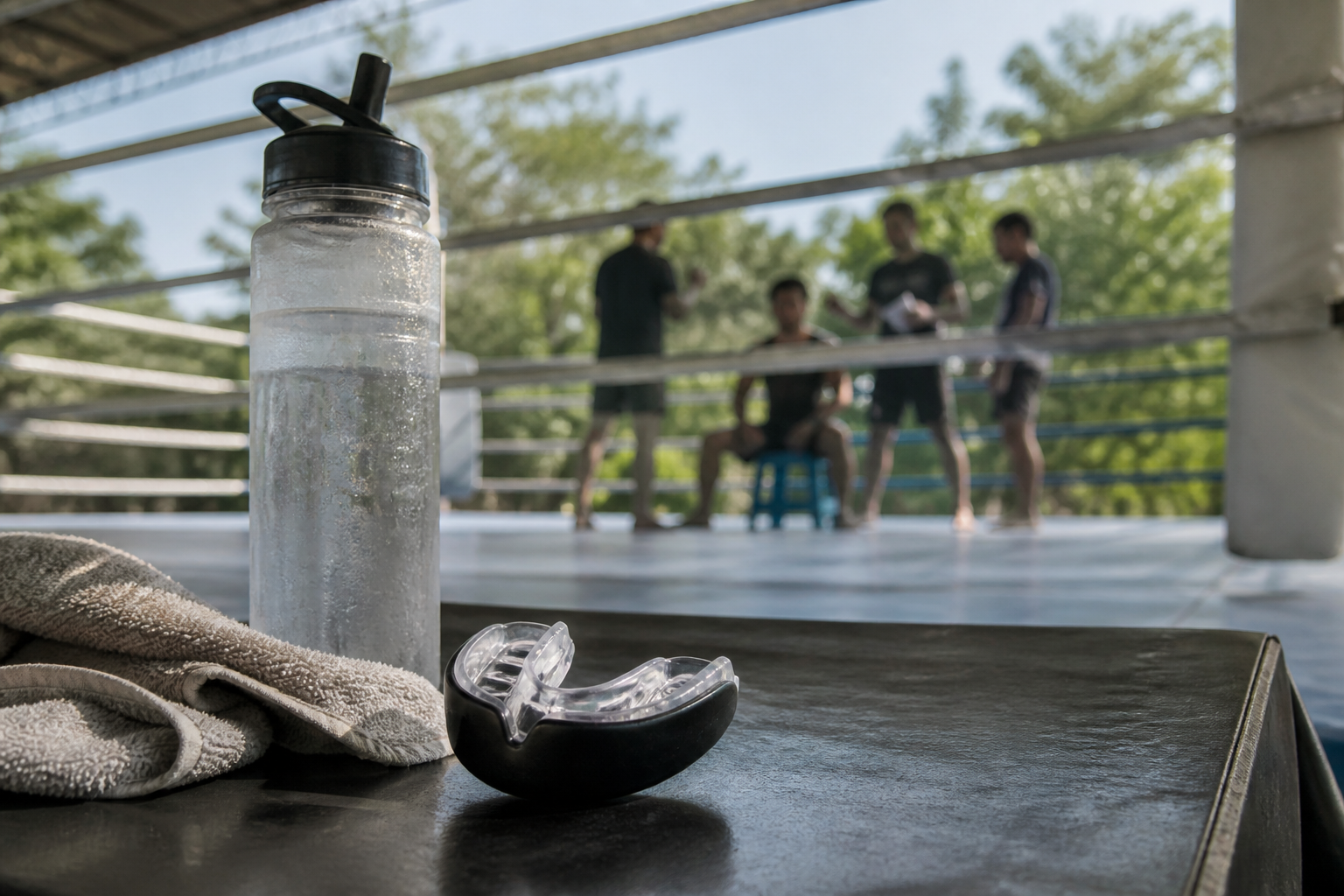
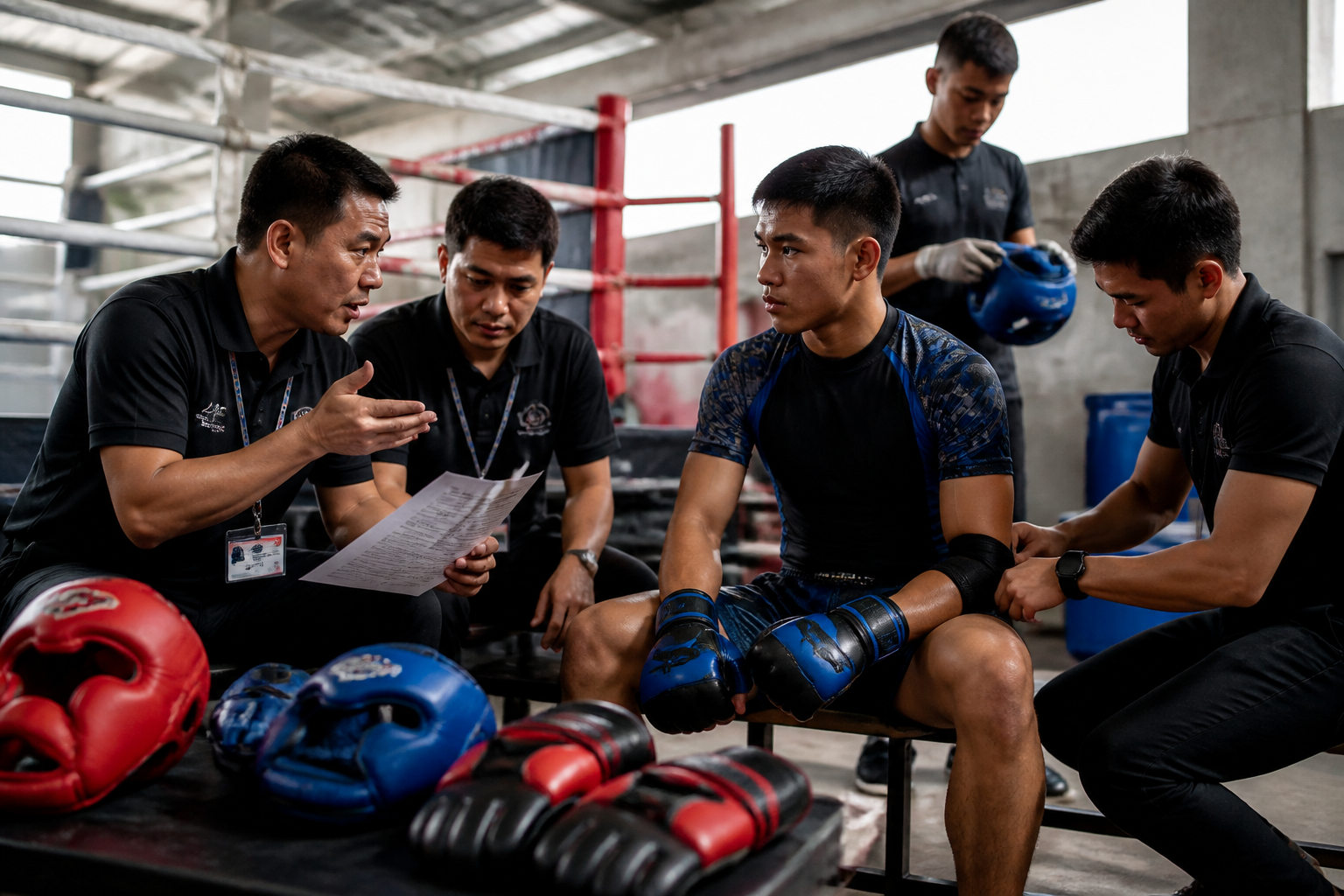
The rulebook requires approved or uniformly supplied attire, MMA gloves of four ounces or more, full-coverage knit shin guards and athlete-supplied mouthguards. Athletes must meet inspection requirements and compete barefoot unless officials specify otherwise.
The equipment changes how fighters move. Shin guards affect kicking exchanges, gloves must still allow grappling, and traditional clothing creates legal grip opportunities that modern clothing does not.
Legal techniques and common fouls
The rules permit punches, kicks, throws, sweeps, takedowns and submissions within approved targets and positions. Headbutts, eye attacks, strikes to the back of the head, spine, groin and throat are prohibited. Head elbows are prohibited, and knee strikes to a standing opponent’s head are legal only in a finals match.
Against a grounded opponent, punching the head, torso, arms and legs is listed as legal, while kicks or knees to the grounded opponent’s head are prohibited. Head-first slams, neck cranks and heel hooks are also prohibited. Modern clothing cannot be grabbed, while traditional gi clothing may be used for permitted grips and submissions.
For Cebu context, compare these rules with Konvoy’s amateur MMA rules guide, but use the applicable event rules whenever they differ.
How Scoring and Stoppages Work
What judges score
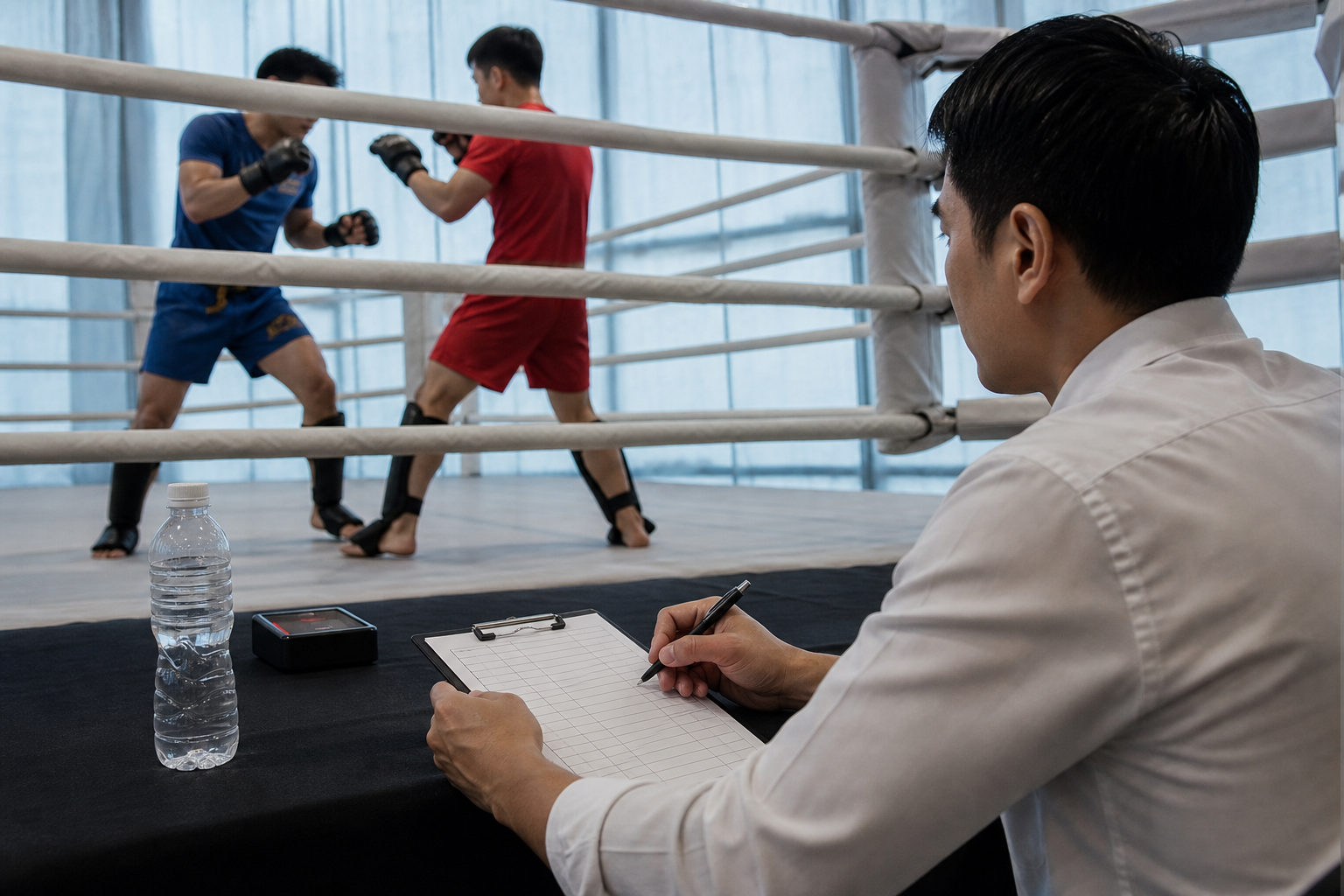
The AMMA scoring rubric gives points for clear, effective strikes and for successful throws, takedowns or dominant control. About three seconds of ground control can score a technical point, while a near submission or near TKO can receive additional value. Judges then convert the technical difference into a 10:9, 10:8 or 10:7 round score.
Control alone does not automatically win a round. Effective legal offense, positional progress and credible finishing threats matter within the published criteria.
Referee and medical stoppages
The referee can issue reminders and warnings, pause the action, deduct points, restart the athletes or stop the contest. A bout may end by time, KO, TKO, submission, disqualification, a corner towel, repeated out-of-bounds incidents or a medical decision that the athlete cannot safely continue.
A stoppage is part of competition management. The event rulebook and medical officials decide the procedure for the specific Games.
Eligibility and Event Structure
AMMA rules state that adult championship athletes must be at least 18, register through an AMMA member, submit required medical documents and pass qualification review. Competition can use draws, brackets or round-robin formats depending on the number of athletes.
The final Aichi-Nagoya entry process may add federation, accreditation, anti-doping and event-specific requirements. Fighters should request the current written rules and event manual instead of relying on old tournament information or professional-promotion rules.
Why Amateur Rules Differ From Professional MMA
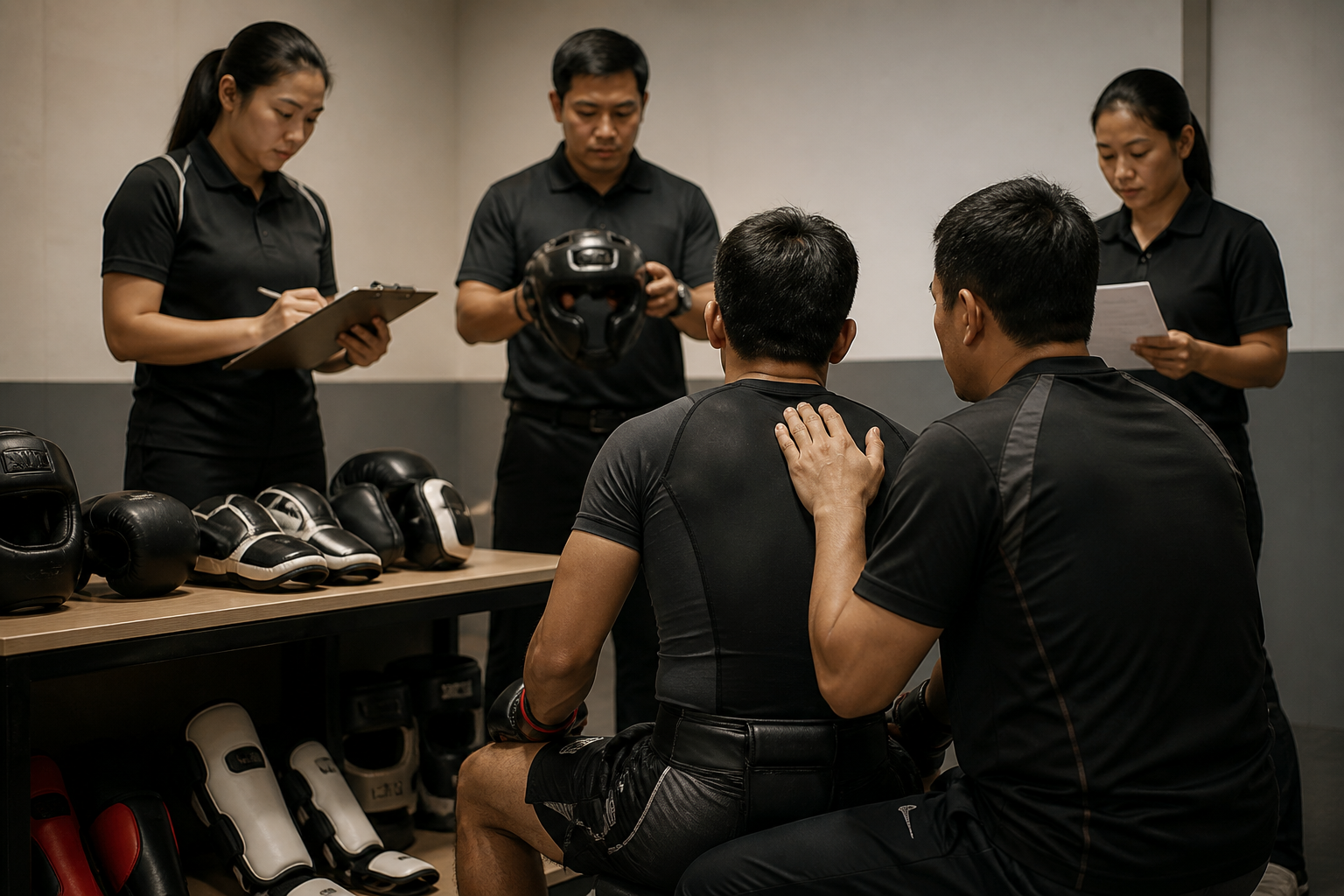
Professional MMA is built around a contracted matchup, promotion strategy and a particular commission or house ruleset. Asian Games MMA must also protect a tournament schedule, national delegations and athletes who may compete more than once.
That is why tighter equipment standards, shorter preliminary rounds, division-specific clothing and more restricted techniques can make sense. Amateur rules are not less real; they are a different framework for testing complete skills while supporting development and repeat competition.
For Konvoy readers, the local connection is clear: Cebu fighters build experience in gyms, regional cards and national pathways before larger opportunities appear. Follow Konvoy’s events for local fight-card updates and use the event’s own rules whenever you compete or attend.
Questions New Fans Often Ask
Are Asian Games MMA rules the same as professional MMA rules?
No. Asian Games MMA uses an amateur, event-specific framework. Professional rules vary by commission, jurisdiction and promotion.
Why do athletes wear more protective equipment?
Approved gloves, shin guards, mouthguards and division-specific clothing help standardize a tournament in which athletes may compete more than once.
Does traditional MMA mean outdated MMA?
No. Traditional is a division label describing a gi-based format. It does not describe the athletes’ skill or the age of the sport.
Will the Asian Games use the same setup as Konvoy?
Do not assume so. Konvoy events and the Asian Games have different organizers and event documents. Check the official Aichi-Nagoya materials for the approved competition setup.
Can an Asian Games athlete later become a professional?
Yes. Amateur competition can give athletes experience before they pursue professional opportunities, provided they meet the next promotion’s requirements.
Follow Konvoy for the Next Fight Night
The Asian Games gives MMA in Asia a larger stage, but the sport is still built locally – in Cebu gyms, regional events, national tryouts and every hard round that develops a fighter. Follow Konvoy for announcements, browse the Konvoy events gallery, and contact the promotion through its official website for current athlete or partner inquiries.