
October 20, 2026
How Do MMA Fighters Prepare for Fight Night? A Look at the Training Camp Process
From skill work and sparring to fight week and weigh-ins, here's how MMA fighters typically structure a training camp before stepping into the ring.
Long before the lights hit the ring, fight night is already being built in quieter places: on mats slick with sweat, under heavy bags that do not move unless someone makes them move, and inside the small decisions fighters repeat for weeks. The walkout gets the attention, but the MMA training camp is where the bout starts to take shape.
For fans, camp explains why a fighter looks sharp, flat, patient, explosive, calm, or rushed when the bell sounds. For aspiring athletes, it shows that how MMA fighters train for a fight is not random punishment. It is a structured push toward one night, one opponent, and one chance to make the work visible.
What an MMA Training Camp Is Really For
An MMA fight camp is usually a focused training block built around a scheduled bout. The exact structure depends on the athlete, coach, opponent, ruleset, experience level, injuries, weight class, and gym resources, but the goal is consistent: arrive on fight night prepared enough to execute under pressure.
In Cebu’s combat-sports community, that preparation can mean early striking rounds in one gym, wrestling drills in another, and evening grappling work with teammates who know how to make every exchange uncomfortable. MMA training in Cebu has its own rhythm, shaped by local athletes, visiting coaches, and a fight community that keeps learning.
Camp length and training phases
A typical camp often runs around six to ten weeks, though some fighters stay near fight shape year-round and treat camp as a sharpening period. Early weeks usually build volume, clean up technical problems, and identify the broad game plan. Middle weeks tend to carry the heaviest sparring, drilling, and conditioning load.
As fight night gets closer, the work usually becomes more specific. Coaches narrow the plan, rounds start looking more like the expected bout, and the fighter begins reducing unnecessary fatigue. The final stretch is less about adding new weapons and more about trusting the ones already loaded.
The difference between training hard and training specifically
Every fighter can look busy in a gym. The better question is whether the work points toward the opponent and the demands of the match. A striker preparing for a pressure wrestler has a different camp from a grappler facing a long-range kicker.
Specific training does not mean abandoning fundamentals. It means choosing which fundamentals matter most for this fight. Footwork, takedown defense, clinch exits, submission awareness, and ring positioning all become sharper when they are tied to a clear tactical problem.
Skill Work: Striking, Wrestling, and Brazilian Jiu-Jitsu
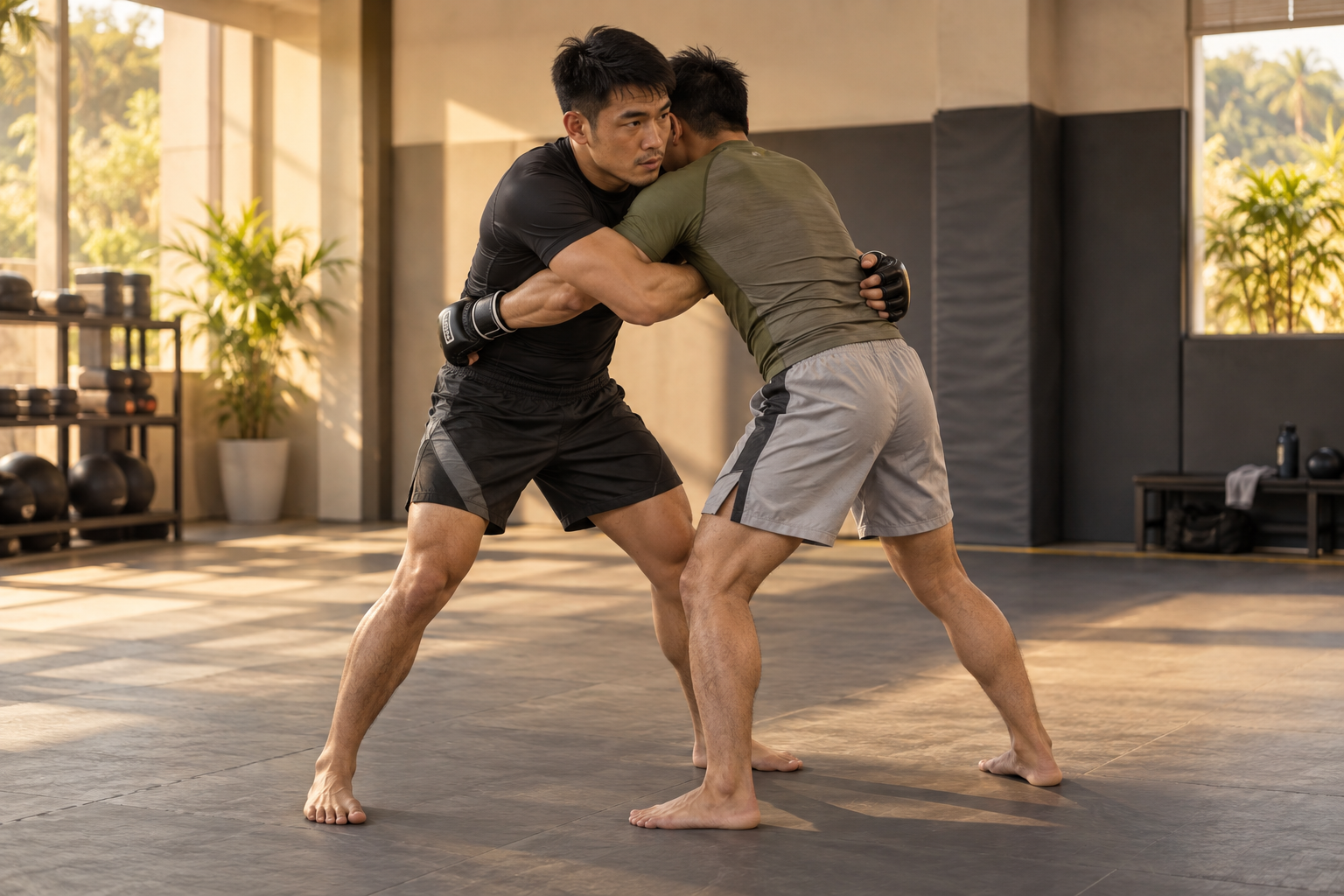
MMA is not three sports stacked on top of each other. It is a blended rule set where punches change takedown entries, takedown threats change striking rhythm, and grappling positions create strikes that would not exist in pure Brazilian jiu-jitsu.
That is why camp usually separates skill blocks while also bringing them back together. Fighters may spend one session on boxing defense, another on wrestling chains, another on guard recovery, then later combine those skills in controlled MMA rounds.
Striking with MMA consequences
Striking in an MMA training camp is not just about clean combinations. Fighters have to throw without giving away easy takedowns, manage distance near the ropes, and exit exchanges without drifting into bad positions. A beautiful kick is less useful if it leaves the fighter squared up and vulnerable.
Coaches often build sessions around stance discipline, feints, counters, and exits. Pad work can sharpen timing, while partner drills make the reactions more realistic. The best striking rounds teach fighters when to commit, when to draw a reaction, and when to reset before the exchange turns against them.
Wrestling and clinch control
Wrestling changes the emotional temperature of a fight. A fighter who can threaten takedowns forces the opponent to think twice before planting their feet. A fighter who can defend takedowns can strike with more confidence and spend less energy scrambling back up.
In camp, wrestling work often includes entries, sprawls, rope-line pressure and clinch control adapted to the ring environment, body locks, trips, mat returns, and stand-ups. The clinch can become its own battle, especially when knees, underhooks, head position, and balance all collide. Cebu gyms with strong wrestling and grappling rooms give athletes the kind of resistance that makes those moments more honest.
Brazilian jiu-jitsu for MMA
Brazilian jiu-jitsu in MMA has a different urgency from sport grappling. Fighters still need sweeps, submissions, guard work, and positional escapes, but they also have to account for strikes and judges. A position that feels playable in pure grappling can become dangerous when punches are involved.
Camp usually emphasizes high-percentage transitions: getting back to the feet, controlling top position, passing safely, defending submissions, and attacking when the opponent exposes a limb or neck during scrambles. The goal is not to win a gym roll. The goal is to make grappling useful inside a fight where every second costs energy.
MMA Strength and Conditioning Without Wasted Work

MMA strength and conditioning has to serve the fight, not the athlete’s ego. More sweat does not automatically mean better preparation. A good program builds power, endurance, repeat effort ability, and resilience without stealing too much from skill training.
Good training practice emphasizes recovery, progressive loading, and specificity rather than raw volume. General guidance from the American College of Sports Medicine and public health information on dehydration from MedlinePlus both reinforce a simple point fighters already understand: the body performs best when training stress and recovery are managed intelligently.
Building the engine
Conditioning for MMA is not the same as jogging until tired. Fighters need the ability to explode, recover, and explode again across rounds. That often means a mix of aerobic base work, high-intensity intervals, pad rounds, grappling rounds, and sport-specific circuits.
The aerobic system helps a fighter stay composed between exchanges. High-intensity work helps during scrambles, flurries, and takedown battles. The balance depends on the athlete, but the purpose stays the same: keep the mind clear when the body wants shortcuts.
Strength, power, and durability
Strength work can support punching mechanics, clinch control, takedown defense, posture, and injury resilience. Fighters may use compound lifts, medicine ball throws, loaded carries, jumps, sled work, and rotational exercises. The best sessions are hard enough to build capacity but controlled enough to avoid wrecking the next skill practice.
As camp progresses, heavy strength work often gives way to speed, power, and maintenance. Nobody wins on fight night because they hit a personal record in the weight room three days earlier. The value is in carrying useful strength into the ring without feeling slow or flat.
Recovery as part of the plan
Recovery is not laziness; it is where adaptation happens. Sleep, hydration, nutrition, mobility, and lower-intensity sessions all help fighters absorb the work they have already done. When recovery is ignored, sharp rounds can turn into survival rounds.
Coaches often watch for signs that the load is becoming too expensive: slower reactions, poor mood, bad decision-making, and declining output. Camp should be demanding, but it should not grind the fighter down before the actual fight. The best teams know when to push and when to pull back.
MMA Sparring and Game-Planning
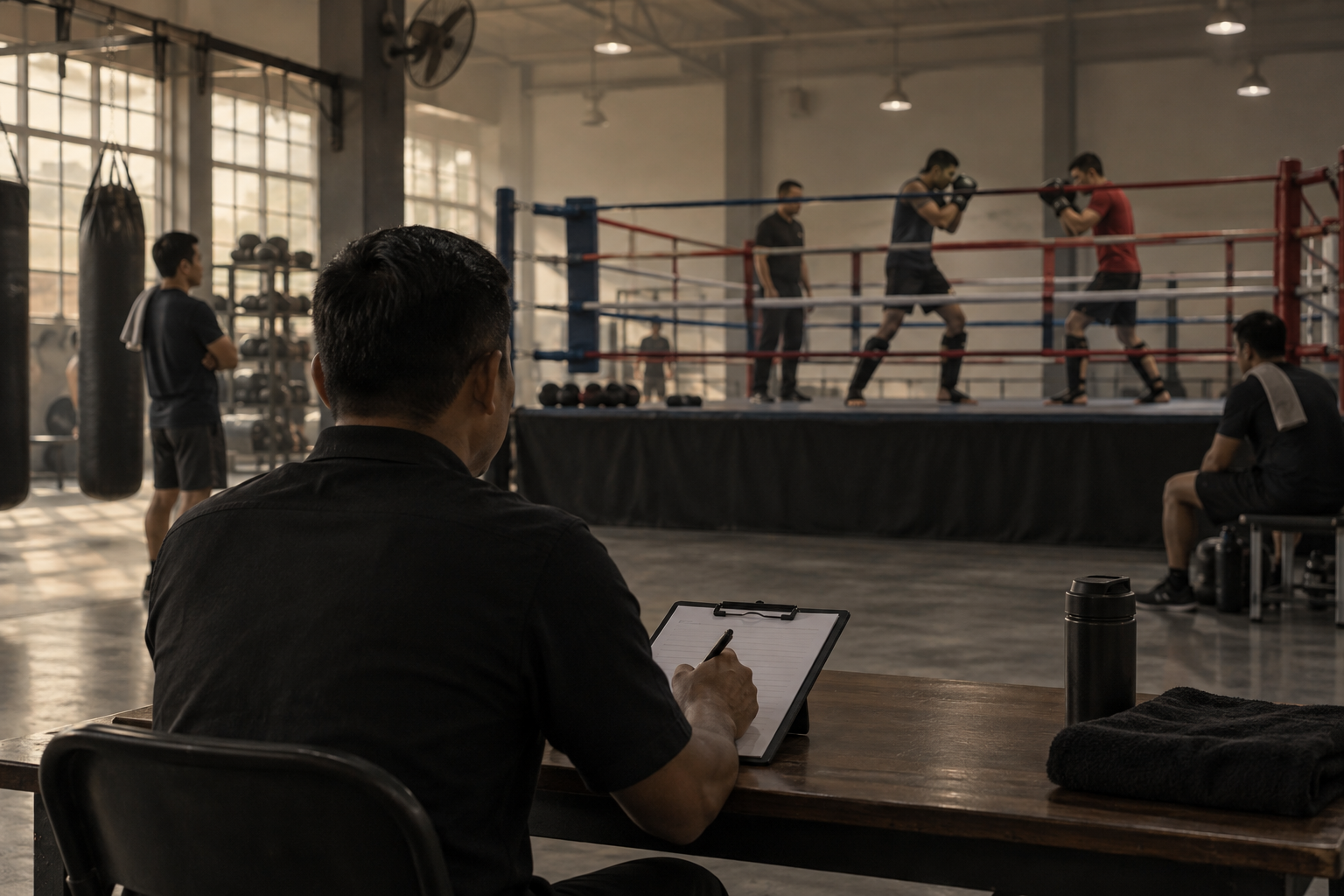
MMA sparring is where the separate pieces meet resistance. It can test timing, composure, distance, defense, and decision-making in ways drills cannot. It also has to be managed carefully because too much hard sparring can drain the very sharpness camp is supposed to build.
Game-planning gives that sparring a purpose. Instead of trading rounds for pride, the fighter learns what the fight should look like when things are going well and what must happen when the opponent disrupts the plan.
Different types of sparring
Not all sparring is a gym war. Technical sparring may focus on timing and reactions at controlled intensity. Situational sparring might start from the clinch, bottom half guard, a failed shot, or a cornered position near the ropes.
Harder MMA sparring usually appears in the middle of camp, when the fighter has enough base work behind them and enough time afterward to recover. Even then, smart teams set limits. The point is to make the fighter better, not to collect unnecessary damage before the bout.
Studying the opponent
Game-planning begins with patterns. Does the opponent retreat in straight lines? Do they drop their lead hand after kicking? Do they shoot only after being hit, or do they initiate wrestling first? Does their grappling improve on top but stall from bottom?
Coaches translate those reads into practical tasks. The fighter might drill intercepting knees, outside-foot positioning, underhook recovery, body shots, or immediate stand-ups. By fight week, the plan should be simple enough to remember under stress and flexible enough to survive the first surprise.
Building confidence without false certainty
A good camp gives the fighter confidence, but not fantasy. Nobody can predict every exchange once the bell rings. The opponent has a camp too, and they are building their own answers.
The real confidence comes from having seen enough looks in the gym to stay calm when the fight shifts. That is why experienced coaches keep testing fighters with pressure, fatigue, and awkward partners. They are not trying to create a perfect practice round; they are preparing the fighter for imperfect moments.
Fight Week Preparation and the Taper

Fight week preparation is when the training volume drops and the details get louder. The fighter should already be in shape. The final days are about timing, recovery, weight management, mental clarity, and staying connected to the game plan.
This is also when fans start to see more of the public side: media, faceoffs, final announcements, and the building tension around the card. Behind that, the fighter is trying to protect energy while keeping the body awake.
Tapering without going flat
Tapering does not mean doing nothing. Fighters often keep short sessions in place: pad rounds, movement, shadowboxing, technical grappling, drilling, and brief conditioning touches. The intensity may stay crisp, but the total workload usually comes down.
The challenge is psychological as much as physical. Fighters are used to grinding, so lighter sessions can feel strange. Good coaches remind them that freshness is not a weakness; it is part of arriving ready.
Weight, nutrition, and hydration
Weight management varies widely by athlete and division. Some fighters cut significant weight, while others stay closer to their contracted limit throughout camp. Either way, nutrition and hydration choices can affect energy, concentration, and performance.
Extreme dehydration can be dangerous, and fighters should treat weight management with seriousness, not bravado. Weight-management decisions should be made with qualified professionals and the athlete’s team; individual fight preparation varies, and extreme dehydration can be dangerous.
Weigh-ins and the reset afterward
Weigh-ins are a mental checkpoint. The fighter makes the limit, faces the opponent, and then shifts from making weight to restoring energy. The hours afterward are usually about fluids, food, rest, and calming the nervous system.
That reset matters because a fighter can win the scale and still lose the performance if the rebound is poorly handled. The best approach is measured and familiar. Fight week is not the time to experiment with foods, routines, or rituals that have never been tested in camp.
From Cebu Gyms to Fight Night

Cebu’s MMA scene is built on movement between rooms. Fighters learn from boxing coaches, grappling teams, wrestling partners, conditioning sessions, and sparring rounds that make them solve problems in real time. That ecosystem gives rising athletes a place to be tested before they ever step under event lights.
Konvoy sits inside that momentum as a platform for fighters who are still building their names but already carry serious ambition. The promotion’s role is not to claim what happens inside every camp. It is to give prepared athletes a stage where the work can be measured in front of a live crowd.
What fans should watch for
When a fighter walks to the ring, look beyond the stare and the song. Watch how they breathe before the first bell. Watch whether their footwork matches the game plan, whether they panic after a failed takedown, and whether they make adjustments between rounds.
A strong camp often shows up in small details. The fighter checks kicks without overreacting. They return to stance after a scramble. They hear the corner clearly. They do not look shocked when the opponent has success.
What aspiring fighters can learn
Aspiring fighters should see camp as a system, not a punishment contest. Skill work, MMA strength and conditioning, MMA sparring, nutrition, recovery, and fight week preparation all have to support each other. When one piece takes over completely, the whole camp can suffer.
The lesson is to train with intention. Ask what the session is for. Ask how it connects to the fight. Ask whether the work being done today will help when the ring feels smaller, the opponent feels stronger, and the round clock is moving faster than expected.
Why the final walk matters
Fight night compresses weeks of work into minutes. Every jab, sprawl, grip break, breath, and corner instruction carries the memory of camp behind it. The crowd sees the finish, but the fighter feels the repetition.
That is what makes MMA compelling in Cebu and across the region. Fighters reveal the preparation behind each decision when they step into the ring, and the camp comes with them.
Follow Konvoy Toward KONVOY 04

KONVOY 04 is scheduled for November 2026, and the road there will be built through fight-card announcements, athlete stories, matchup news, and the kind of camp work fans rarely see up close. Follow Konvoy for official updates as fighters prepare and ticket information is released.
If you are an athlete looking for the right stage, or a brand that wants to connect with a serious regional fight community, contact Konvoy through its official channels about competing or partnering. The next event is another chance to watch preparation become a fight-night moment.
References
This guide draws on the following authoritative sources: